South Africa’s Budget Speech explained
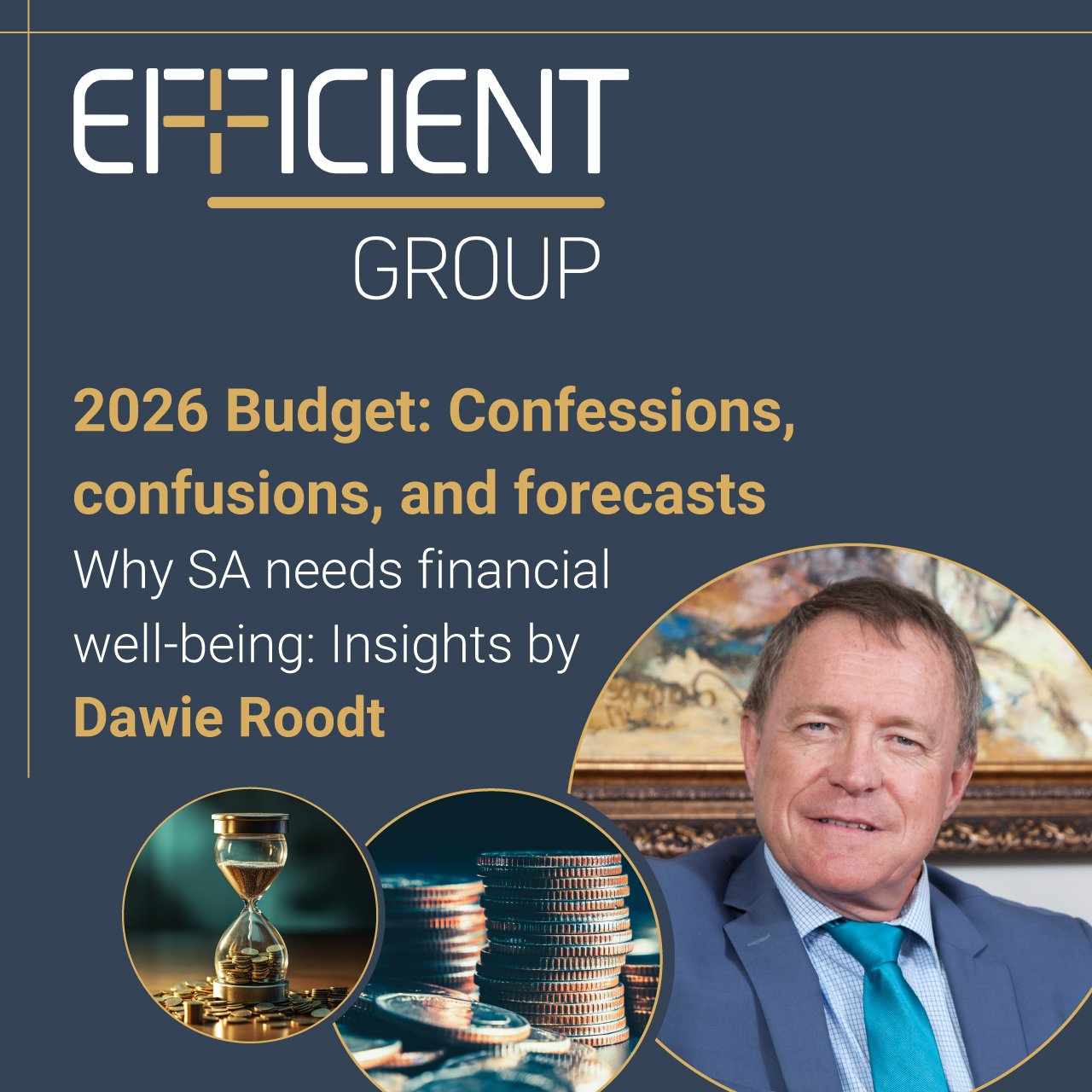
Expert analysis of the 2026 Budget Speech by Dawie Roodt, Chief Economist at Efficient Group. Understand the tax, economic and investment impacts that matter most to you.


The South African Budget Speech is the annual address delivered by the Minister of Finance, outlining government spending plans, taxation proposals, borrowing requirements and economic priorities for the year ahead. It plays a critical role in shaping fiscal policy and directly affects taxpayers, businesses, investors and financial markets across the country.
The Budget Speech itself does not automatically become law. After it is delivered, the proposed budget must be debated, amended where necessary, and formally approved by Parliament before being implemented. Despite this process, financial markets, businesses and individuals respond immediately to the budget’s proposals, making expert interpretation essential from the moment the speech is delivered.
Dawie Roodt, Chief Economist at the Efficient Group, provides clear, independent analysis of South Africa’s Budget Speech; cutting through political messaging to focus on what the numbers and policy decisions really mean. His insights help individuals, investors and businesses understand the implications of the budget and make informed financial decisions with confidence.
In this analysis, Dawie covers:
Explore Dawie Roodt’s analysis of previous South African Budget Speeches to gain perspective on how fiscal policy has evolved over time and what past budgets can tell us about future economic direction.
A breakdown of the major tax, spending and debt themes from the 2025 Budget Speech and their impact on the economy.
A breakdown of the major tax, spending and debt themes from the 2024 Budget Speech and their impact on the economy.
While the Budget Speech focuses on national finances, its impact is deeply personal. Changes to taxation, government spending and economic policy can affect your income, investments and long-term financial security.
Budget decisions influence income tax brackets, rebates, allowances and capital gains tax, all of which play a role in effective wealth planning.
Fiscal discipline, government debt levels and growth forecasts shape market confidence and investment performance.
Ongoing fiscal pressure has long-term implications for retirement adequacy, preservation strategies and financial security in later life.
 https://www.efgroup.co.za/wp-content/uploads/2026/03/AdobeStock_176715920-TAX_SQ-scaled.png
2022
2560
Christine Van Graan
https://www.efgroup.co.za/wp-content/uploads/2024/07/Efficient-Group_Efficient-Group-14-300x142.png
Christine Van Graan2026-03-16 17:25:482026-03-17 10:12:46Budget speech and income tax explained in South Africa
https://www.efgroup.co.za/wp-content/uploads/2026/03/AdobeStock_176715920-TAX_SQ-scaled.png
2022
2560
Christine Van Graan
https://www.efgroup.co.za/wp-content/uploads/2024/07/Efficient-Group_Efficient-Group-14-300x142.png
Christine Van Graan2026-03-16 17:25:482026-03-17 10:12:46Budget speech and income tax explained in South Africa https://www.efgroup.co.za/wp-content/uploads/2026/03/AdobeStock_165278984-scaled.jpeg
1707
2560
Christine Van Graan
https://www.efgroup.co.za/wp-content/uploads/2024/07/Efficient-Group_Efficient-Group-14-300x142.png
Christine Van Graan2026-03-04 11:12:012026-03-05 10:59:56How the 2026 Budget Speech shapes opportunities for South African investors
https://www.efgroup.co.za/wp-content/uploads/2026/03/AdobeStock_165278984-scaled.jpeg
1707
2560
Christine Van Graan
https://www.efgroup.co.za/wp-content/uploads/2024/07/Efficient-Group_Efficient-Group-14-300x142.png
Christine Van Graan2026-03-04 11:12:012026-03-05 10:59:56How the 2026 Budget Speech shapes opportunities for South African investors